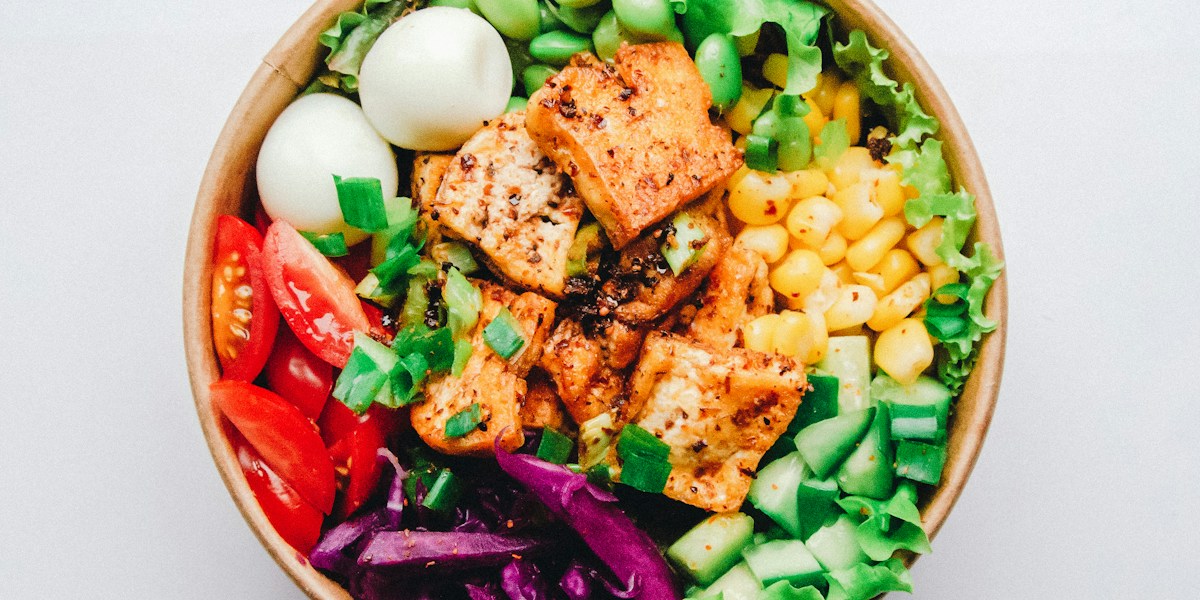


Macros for Weight Loss: The Ultimate Guide
Calories matter for weight loss. But if you’ve ever lost weight only to end up looking “skinny fat”—or regained it all within months—you know that calories alone don’t tell the whole story.
The difference between losing fat and losing muscle? Macros.
The difference between feeling starving all day and feeling satisfied? Macros.
The difference between a sustainable approach and another crash diet? You guessed it—macros.
This guide shows you exactly how to set up your macros for fat loss that actually lasts. Not a 30-day crash course. Not another restrictive diet. A science-backed approach that protects your muscle, keeps you full, and delivers results you can maintain.
Ready to skip the reading and get your personalized fat loss macros? Use our [LINK: Macro Calculator] for instant results.
[IMAGE: Person preparing a balanced macro-friendly meal]
Why Tracking Macros Works Better Than Counting Calories
“Calories in, calories out” is the foundation of weight loss. It’s simple physics—burn more than you eat, and you’ll lose weight.
But here’s what pure calorie counting misses:
Not All Calories Are Equal
Your body processes different macronutrients in completely different ways.
The thermic effect of food (TEF): Your body burns calories just digesting what you eat. But the amount varies dramatically by macro:
| Macronutrient | Thermic Effect |
|---|---|
| Protein | 20-30% |
| Carbohydrates | 5-10% |
| Fat | 0-3% |
Eat 100 calories of protein? Your body uses 20-30 calories just processing it. Eat 100 calories of fat? Maybe 3 calories for digestion. Same “calories”—different actual energy.
This is one reason high-protein diets are so effective. You’re literally burning more calories eating the same amount.
Protein Preserves Muscle
When you diet, your body doesn’t just burn fat. It also breaks down muscle for energy. This is bad news because:
- Muscle is metabolically active (burns calories at rest)
- Muscle gives you a toned, defined appearance
- Losing muscle tanks your metabolism long-term
The solution? Adequate protein signals your body to preserve muscle and prioritize burning fat instead. Research consistently shows that higher protein intake during a calorie deficit leads to significantly more fat loss and less muscle loss compared to lower protein approaches.
Macros Keep You Full
Ever notice how a 300-calorie bowl of cereal leaves you hungry in an hour, while a 300-calorie omelet keeps you satisfied until lunch?
Protein is the most satiating macro. Fat comes second. When you balance your macros properly, you can eat fewer calories while feeling more satisfied than you did before.
This makes the diet sustainable. You’re not white-knuckling through hunger—you’re actually satisfied while losing fat.
Sustainable vs. Restrictive
Pure calorie counting often leads to eating less and less as hunger increases. You slash portions, skip meals, rely on willpower. Eventually, willpower runs out.
Macro-based dieting is different. You eat enough—enough protein to stay full, enough fat to support hormones, enough carbs to fuel activity. You just eat smart.
This is why macro counting has become the gold standard for sustainable fat loss. It works with your biology, not against it.
The Best Macro Ratio for Fat Loss
Now let’s get specific. What macros actually work for losing fat?
The Science-Backed Starting Point
For most people pursuing fat loss, this ratio works extremely well:
40% Protein | 30% Carbs | 30% Fat
Or, expressed differently:
- Protein: 0.8-1g per pound of body weight
- Fat: 0.3-0.4g per pound of body weight
- Carbs: Fill remaining calories
This isn’t arbitrary. Here’s why it works:
Why Higher Protein Works
Research strongly supports high protein for fat loss. A landmark study in the American Journal of Clinical Nutrition found that participants eating 1.2g/kg of protein lost 53% more body fat than those eating 0.8g/kg—while maintaining more muscle.
The benefits of high protein during a deficit:
- Muscle preservation: Your body has adequate building blocks to maintain muscle tissue
- Higher thermic effect: You burn more calories digesting protein than any other macro
- Satiety: Protein keeps you fuller longer, reducing hunger and cravings
- Blood sugar stability: Protein helps moderate blood sugar spikes and crashes
[IMAGE: Macro ratio pie chart showing 40/30/30 split]
Adjusting for Your Body
40/30/30 is a starting point, not a law. You can adjust based on:
Activity level:
- Very active? You might do better with more carbs (40/40/20)
- Sedentary? Lower carbs often feel better (40/25/35)
Personal preference:
- Love carbs? No need to go ultra-low. Keep them moderate.
- Prefer higher fat for satiety? That works too.
Metabolic considerations:
- Insulin resistant? May benefit from lower carbs
- Very active with high energy demands? More carbs help performance
Common Ratio Variations
| Split | Best For | Note |
|---|---|---|
| 40/30/30 | Most fat loss goals | Balanced, sustainable |
| 40/40/20 | Active people, carb lovers | Supports intense training |
| 40/25/35 | Satiety-focused, moderate activity | Higher fat keeps you full |
| 35/25/40 | Low-carb preference | Works if you prefer fat over carbs |
The key: protein stays high. Carbs and fats can flex based on what’s sustainable for you.
How to Calculate Your Macros for Weight Loss
Let’s walk through the exact process to find your fat loss macros.
Step 1: Find Your Maintenance Calories (TDEE)
Your Total Daily Energy Expenditure (TDEE) is how many calories you burn per day, including all activity. This is your baseline.
Quick estimation method:
- Sedentary: Bodyweight × 12-13
- Lightly active: Bodyweight × 13-14
- Moderately active: Bodyweight × 14-15
- Very active: Bodyweight × 15-17
Example: A 160-pound moderately active person burns roughly 2,240-2,400 calories daily.
For a more precise calculation, use our [LINK: Macro Calculator] which factors in age, height, weight, and activity level using the Mifflin-St Jeor equation.
Step 2: Create a Calorie Deficit
To lose fat, you need to eat less than you burn. But not too much less—aggressive deficits backfire.
Recommended deficit:
- 500 calories below TDEE = ~1 lb/week loss
- 20% below TDEE = Similar result, scales with your size
Example:
- TDEE: 2,200 calories
- Fat loss target: 2,200 - 500 = 1,700 calories
Warning signs your deficit is too aggressive:
- Extreme hunger that doesn’t subside
- Tanked energy and workout performance
- Sleep disruption
- Hair loss or feeling cold all the time
- Losing more than 1% of body weight per week
If you’re experiencing these, eat more. Slow and steady beats crash and burn.
Step 3: Set Your Protein
Protein is calculated by bodyweight, not by percentage:
Target: 0.8-1g per pound of body weight
For someone who’s overweight, use goal weight instead—or lean body mass if you know it.
Example:
- Current weight: 180 lbs
- Goal weight: 150 lbs
- Protein target: 150g per day (using goal weight)
- Calories from protein: 150 × 4 = 600 calories
Step 4: Set Your Fat
Fat supports hormones, absorbs vitamins, and keeps you satisfied. Don’t go too low.
Target: 0.3-0.4g per pound of body weight
Example:
- Weight: 180 lbs
- Fat target: 54-72g per day (let’s use 60g)
- Calories from fat: 60 × 9 = 540 calories
Step 5: Fill Remaining Calories with Carbs
After protein and fat, your remaining calories come from carbohydrates.
Formula: (Total calories - protein calories - fat calories) ÷ 4 = carb grams
Example:
- Total calories: 1,700
- Protein calories: 600
- Fat calories: 540
- Remaining: 1,700 - 600 - 540 = 560 calories
- Carbs: 560 ÷ 4 = 140g
Final macros for this example:
- Calories: 1,700
- Protein: 150g
- Carbs: 140g
- Fat: 60g
Don’t want to do the math? Our [LINK: Macro Calculator] handles all of this instantly. Plug in your details, get your numbers.
Macros for Weight Loss: Women vs Men
The principles are identical—but the application differs.
Macros for Women
Women face unique considerations:
Hormonal factors:
- Estrogen and progesterone fluctuate throughout the menstrual cycle
- These hormones affect water retention, hunger, and energy
- Some women notice increased appetite and cravings before their period
Practical adjustments:
- Don’t stress if the scale spikes before your period—it’s water
- Consider slightly higher fat (0.35-0.5g/lb) for hormone support
- Track your cycle to understand your patterns
Calorie floors: Women generally shouldn’t go below 1,200-1,400 calories long-term. If your calculations suggest lower, increase activity instead of cutting calories further.
[LINK: Macros for Women] for a complete women’s guide.
For women serious about results: WarriorBabe’s Macro Method provides personalized coaching, community support, and proven protocols specifically for women. [LINK: WarriorBabe]
Macros for Men
Men typically have:
- Higher caloric needs (more muscle mass)
- Higher protein needs (larger body)
- More room for carbs due to higher overall calories
The process is identical—men just work with bigger numbers generally.
How to Track Your Macros for Weight Loss
Knowing your macros is step one. Hitting them requires tracking.
Best Tracking Apps
- MyFitnessPal: Largest food database, barcode scanner, free version works fine
- Cronometer: More accurate verified database, cleaner interface
- MacroFactor: Premium but excellent, adapts to your actual results
- LoseIt: Simple, beginner-friendly
The Food Scale Investment
Buy a $15 food scale. It’s the most impactful purchase you’ll make for your diet.
People wildly underestimate portions. “A tablespoon of peanut butter” is often two or three tablespoons. “A serving of pasta” is often double. A food scale removes the guessing.
Meal Prepping for Success
Tracking is 10x easier when you control your food:
- Batch cook proteins: Grill 2-3 lbs of chicken, cook ground turkey, hard-boil eggs
- Prep vegetables: Wash, chop, and store for easy access
- Know your go-to meals: Have 5-7 meals you can make without thinking
- Pre-log your day: Plan meals in your app before eating, adjust if needed
Restaurant Strategies
Eating out doesn’t have to derail you:
- Check menus in advance: Many restaurants post nutrition online
- Prioritize protein: Grilled chicken, fish, steak
- Ask for sauces on the side: Control what you add
- Don’t stress occasional meals: One restaurant dinner won’t ruin your progress
[LINK: Counting Macros for Beginners] for the complete tracking guide.
7 Common Macro Mistakes That Stall Weight Loss
Avoid these pitfalls that sabotage fat loss:
Mistake #1: Not Weighing Food
Eyeballing portions is wildly inaccurate. Most people underestimate calories by 20-50%. A food scale costs $15 and changes everything.
Mistake #2: Forgetting Cooking Oils and Sauces
One tablespoon of olive oil = 120 calories and 14g fat. Cooking oils, salad dressings, and sauces add up fast. Track them.
Mistake #3: Protein Too Low
The single biggest mistake. Most people undereat protein, then wonder why they’re hungry, losing muscle, and plateauing. Hit your protein target—everything else is secondary.
Mistake #4: Deficit Too Aggressive
Eating 1,000 calories when you need 1,600 doesn’t accelerate fat loss—it crashes your metabolism, tanks your energy, and leads to muscle loss and binge eating. Moderate deficits win.
Mistake #5: Weekend Blowouts
Five days of perfect tracking undone by two days of “treating yourself.” If you’re eating 1,500 calories Monday-Friday and 3,000+ Saturday-Sunday, you might not be in a deficit at all. Consistency matters.
Mistake #6: Not Adjusting as You Lose
Your macros aren’t set forever. As you lose weight, your TDEE decreases. Recalculate every 10-15 pounds or when progress stalls for 3+ weeks.
Mistake #7: Obsessing Over Perfection
Within 5-10 grams of each macro is good enough. Chasing perfection leads to stress and burnout. Consistency at 80% accuracy beats perfection that lasts two weeks.
What to Do When Your Weight Loss Stalls
Plateaus happen to everyone. Here’s how to break through:
First, Confirm It’s a Real Plateau
A plateau is 3-4+ weeks without scale movement despite consistent tracking. A few days or even a week isn’t a plateau—it’s normal fluctuation.
Track weekly averages, not daily weigh-ins. Weight fluctuates by 2-5 pounds day-to-day based on water, sodium, and digestion.
Recalculate Your Macros
Lost 10-15 pounds? Your body needs less energy now. Recalculate TDEE based on your new weight and adjust macros accordingly.
Use the [LINK: Macro Calculator] to get updated numbers.
Check Your Tracking Accuracy
Be honest:
- Are you weighing food or estimating?
- Are you tracking everything (oils, sauces, bites, drinks)?
- Are weekends accurately logged?
Most “plateaus” are actually underestimated intake. Tighten up tracking before changing calories.
Consider a Diet Break
If you’ve been dieting for 12+ weeks, a 1-2 week diet break at maintenance calories can help. It restores hormones, gives you a mental break, and often leads to better fat loss when you resume the deficit.
Adjust and Continue
If tracking is accurate and you’ve been dieting a while, reduce calories by 100-200 per day. Or increase activity (more steps, extra cardio session). Make one change, give it 2-3 weeks, reassess.
[LINK: Weight Loss Plateau] for a deeper dive on breaking stalls.
Macros for Weight Loss FAQ
How long does it take to see results?
Most people notice changes within 2-4 weeks:
- Week 1-2: Water weight often drops quickly
- Week 3-4: Fat loss becomes visible
- Week 6-8: Others start noticing
- Week 12+: Significant visual transformation
Be patient. Sustainable fat loss is 0.5-1% of body weight per week.
Can I lose weight without tracking macros?
Yes, but tracking dramatically increases success rates. You can lose weight by simply eating less and choosing better foods—but tracking removes the guesswork and ensures you’re actually in a deficit.
Consider tracking strictly for 8-12 weeks to build awareness, then transitioning to a more intuitive approach once you’ve learned portion sizes.
What if I go over my macros?
It’s one meal or one day. Not a crisis.
Don’t try to “make up for it” by eating 800 calories tomorrow. Don’t spiral into guilt. Just resume normal macros at your next meal. Consistency over time matters infinitely more than any single day.
Should I eat back exercise calories?
Generally no. Your activity multiplier already accounts for regular exercise. Fitness trackers often overestimate calorie burn by 30-50%, so “eating back” burned calories frequently leads to no deficit at all.
If you’re genuinely very active and noticing fatigue, hunger, or performance drops, consider a slight increase. But don’t automatically add back every calorie your watch claims you burned.
How do I know if my macros are working?
Give any setup 2-3 weeks, then assess:
✅ Signs it’s working:
- Scale trending down (weekly average)
- Measurements decreasing (waist especially)
- Progress photos showing change
- Energy is sustainable
- Hunger is manageable
❌ Signs to adjust:
- No scale movement after 3 weeks of accurate tracking
- Extreme fatigue or hunger
- Workout performance tanking
- Feeling miserable
Is this the same as IIFYM/flexible dieting?
Yes, it’s the same concept. IIFYM (If It Fits Your Macros) means you can eat any foods as long as you hit your macro targets. The flexibility makes it sustainable.
That said, food quality still matters for health, energy, and satiety. Aim for 80% whole foods, 20% whatever you enjoy. You’ll feel better than if you hit macros entirely with processed food.
Your Weight Loss Action Plan
You now understand why macros matter more than just calories, how to calculate your fat loss targets, and how to avoid the mistakes that stall most people.
Here’s your action plan:
- Calculate your macros: Use our [LINK: Macro Calculator] for personalized numbers
- Download a tracking app: MyFitnessPal, Cronometer, or MacroFactor
- Get a food scale: $15 investment that changes everything
- Track accurately for 2-3 weeks: Build the habit before judging results
- Assess and adjust: If it’s working, continue. If not, troubleshoot.
Macros work because they align with how your body actually processes food. You eat enough protein to preserve muscle, enough fat to support hormones, and enough carbs to maintain energy—all while staying in a deficit that produces fat loss.
This isn’t a crash diet. It’s a skill. Learn it once, use it for life.
Ready to start? [LINK: Macro Calculator] — Get your personalized fat loss macros in 60 seconds.
For women seeking support: WarriorBabe’s Macro Method combines personalized macros with expert coaching and a supportive community. If you want guidance beyond DIY, [LINK: WarriorBabe] is built specifically for women who are ready to transform.
Your fat loss journey starts with the right numbers. Now you have them—and you know exactly what to do with them.